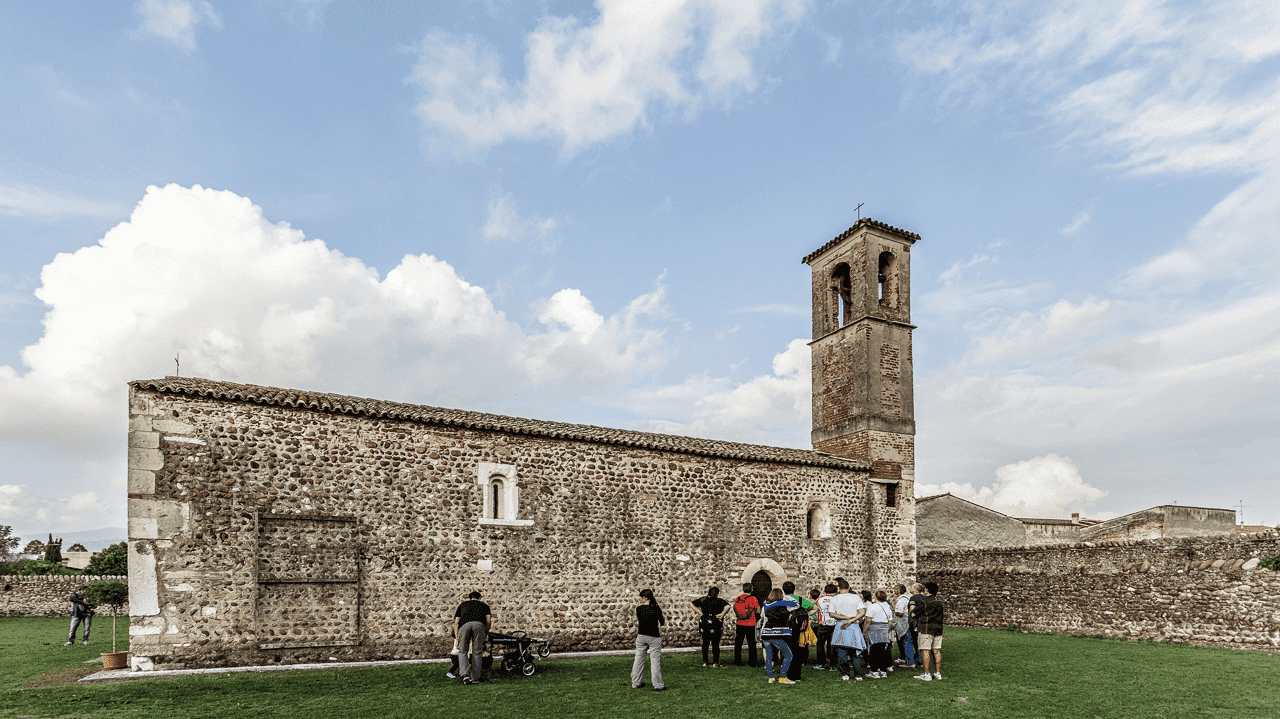
Pescantina grew up along the Adige, creating a hub in former times around which a flourishing system of trade developed. Its name derives from “pescante” — a thing that dips or floats in water — in this instance a place that marks the close links created with the river.
It is an ancient town, perhaps of Roman origin, but it was the Middle Ages that saw the growth of many trading activities linked with trade on the Adige. Pescantina became an important centre of river navigation, acquiring wealth and renown during the years of Venetian rule and into the second half of the 19th century.
The boats built in the local yards were small in size and with an almost flat bottom, ideal for navigating the shallow waters of rivers and lagoon deltas. The best known was the ‘burchio’, built of larch, oak and spruce, it was around 35 metres in length and had a cargo capacity of 200 tonnes.
These boats would make the journey along the Adige from Pescantina to Venice in about three days, whereas the return journey took perhaps 15 days. The return upstream was accomplished with the aid of horses or oxen, which pulled the boat from a tow-path adjacent to the river, known locally as the ‘tiraglio’ or ‘cavallara’.
The decline of river traffic was determined by historical events, not least recurrent plagues, and the arrival of the Napoleonic armies in the late 18th century.
Once the Verona-Trento railway line had been built, and opened in 1859, the carriage of goods by water became a thing of the past.
At the end of the Second World War, Pescantina again came to prominence by virtue of the wonderful reception given to repatriated survivors of the concentration camps.
Balconi di Pescantina became a railway terminus at that time, and many people arriving there found a welfare camp where the local townspeople busied themselves to offer every possible care and assistance.
On 25 September 1966, a monument was erected to honour the fallen, and former interns.